 By Vahid Alaghehband
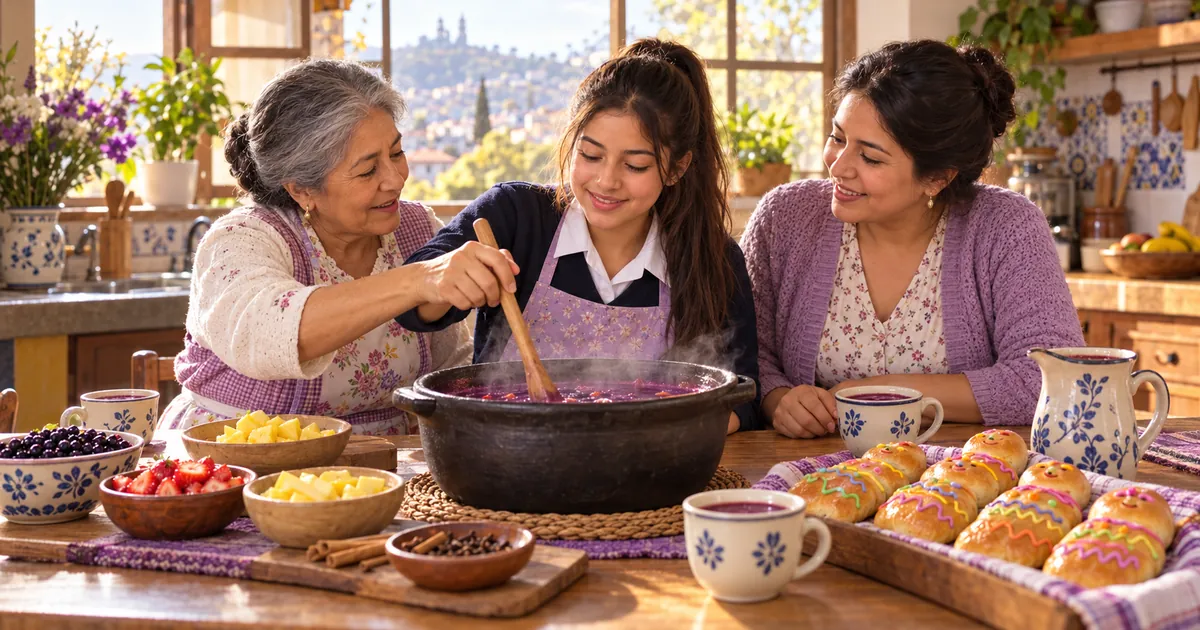
In Ecuador, the Day of the Dead (Día de los Difuntos) is on November 2 and it's a public holiday. Families visit the cemetery to remember their loved ones and share colada morada, a thick, warm purple drink made with purple corn flour, fruit and spices, and guaguas de pan, sweet breads shaped like babies.
If you live in Ecuador, are visiting in early November or are learning English here, this guide gives you the words and simple phrases to talk about one of the country's most loved traditions.
How does Ecuador celebrate the Day of the Dead?
On November 2, many families go to the cemetery in the morning, clean the graves, bring flowers and remember their loved ones. Then they share colada morada and guaguas de pan at home. It's a public holiday, and for many people it's a quiet day to remember rather than a sad one. In the Catholic calendar, November 2 is All Souls' Day and November 1 is All Saints' Day.
What is colada morada?
Colada morada is a thick, warm purple drink made with purple corn flour, fruit, spices and herbs. It's sold and made at home in late October and early November. The name isn't translated: in English you say colada morada and explain it, just like tacos or sushi.
According to Primicias, the drink has pre-Hispanic roots: Andean peoples made a drink with black corn in the rainy season, between October and November, to honor their dead. After the Spanish arrived, the tradition mixed with the Catholic All Souls' Day and became the colada people drink today.
Colada morada ingredients in English
Every family has its own recipe, but these are the most common ingredients according to El Universo. Andean fruits like mortiño or babaco keep their Spanish names.
| Spanish | English |
|---|---|
| harina de maíz morado (harina morada) | purple corn flour Gives the drink its color and makes it thick. |
| mortiño | mortiño (Andean blueberry) A wild berry from the Andean highlands. |
| mora | blackberry |
| frutilla | strawberry |
| piña | pineapple |
| babaco | babaco No English name: keep it in Spanish. |
| naranjilla | naranjilla (lulo) A small, sour orange fruit; keep the Spanish name. |
| guayaba | guava |
| pasas | raisins |
| canela en rama | cinnamon sticks |
| clavo de olor | cloves |
| pimienta dulce | allspice |
| hierba luisa | lemongrass |
| cedrón | lemon verbena |
| hoja de naranja | orange leaves |
| panela o azúcar | panela (unrefined cane sugar) or sugar Panela is common in Ecuador. |
Some recipes add ishpingo, a spice from the Amazon. El Universo notes that colada brings together ingredients from Ecuador's three regions: mortiño from the highlands, pineapple from the coast and ishpingo from the Amazon.
What are guaguas de pan?
Guaguas de pan are sweet breads shaped like babies or small children, decorated with colored icing. Guagua means "baby" or "child" in Kichwa. Many are filled with jam or guava paste. According to Primicias, in Andean tradition the colada represents the blood and the guaguas the body of the dead.
Phrases to talk about the Day of the Dead
- In Ecuador, we celebrate the Day of the Dead on November 2.
- It's a public holiday, so we have a long weekend.
- Families visit the cemetery and bring flowers.
- We drink colada morada and eat guaguas de pan.
- Would you like to try some colada?
- It's different from Halloween.
Mini quiz: in, on or at?
Complete each sentence with in, on or at, then open the answer.
We drink colada morada ___ November 2.
Show answer
on: dates and days take on (on November 2, on Monday).
Guaguas de pan are sold ___ October and November.
Show answer
in: months take in (in October).
We go to the cemetery ___ the morning.
Show answer
in: in the morning, in the afternoon; but at night.
My family has dinner together ___ 7 p.m.
Show answer
at: clock times take at (at 7 p.m.).
2026 holiday: Day of the Dead and Cuenca's Independence Day
According to El Comercio, in 2026 the Day of the Dead falls on Monday, November 2, and Cuenca's Independence Day on Tuesday, November 3, so there's a long weekend. Many people travel, and Cuenca holds its city festivities.
Practice these phrases with Vozi Coach
With Vozi Coach you can talk about your traditions by voice or text and practice explaining them in English, at your level.
Explore Vozi Coach →Read next: Halloween vocabulary, in, on, at prepositions and, for December, Christmas vocabulary.
Frequently asked questions
How does Ecuador celebrate the Day of the Dead?
On November 2, a public holiday, families visit the cemetery, bring flowers and remember their loved ones, then share colada morada and guaguas de pan at home.
What is colada morada in English?
It isn't translated. Colada morada is a thick, warm purple drink made with purple corn flour, fruit, spices and herbs, made in late October and early November.
What does guagua mean?
Guagua means baby or child in Kichwa. Guaguas de pan are sweet breads shaped like babies, eaten for the Day of the Dead.
When is the Day of the Dead holiday in Ecuador in 2026?
Monday, November 2, 2026. Tuesday, November 3 is also a holiday for Cuenca's Independence Day.
Is the Day of the Dead the same as Halloween?
No. Halloween is on October 31; Ecuador's Day of the Dead is on November 2 and is a day to remember family members who have died.