 By Vahid Alaghehband
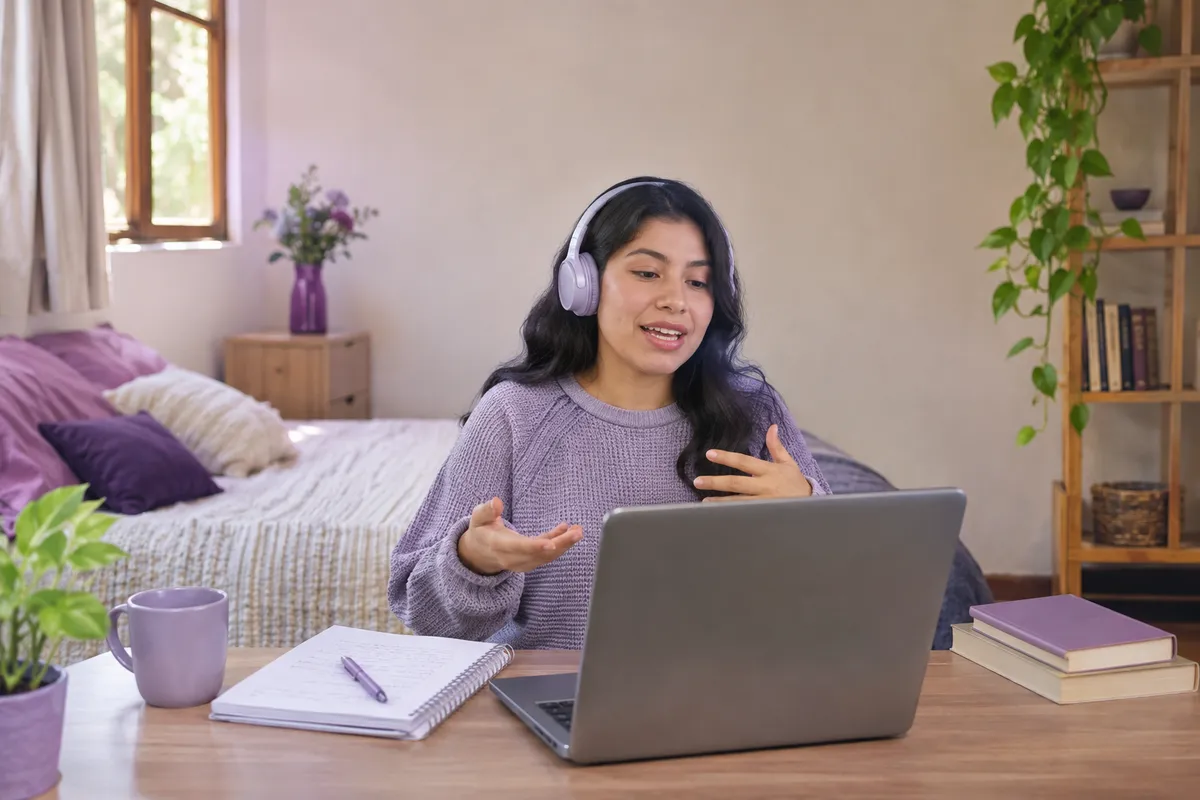
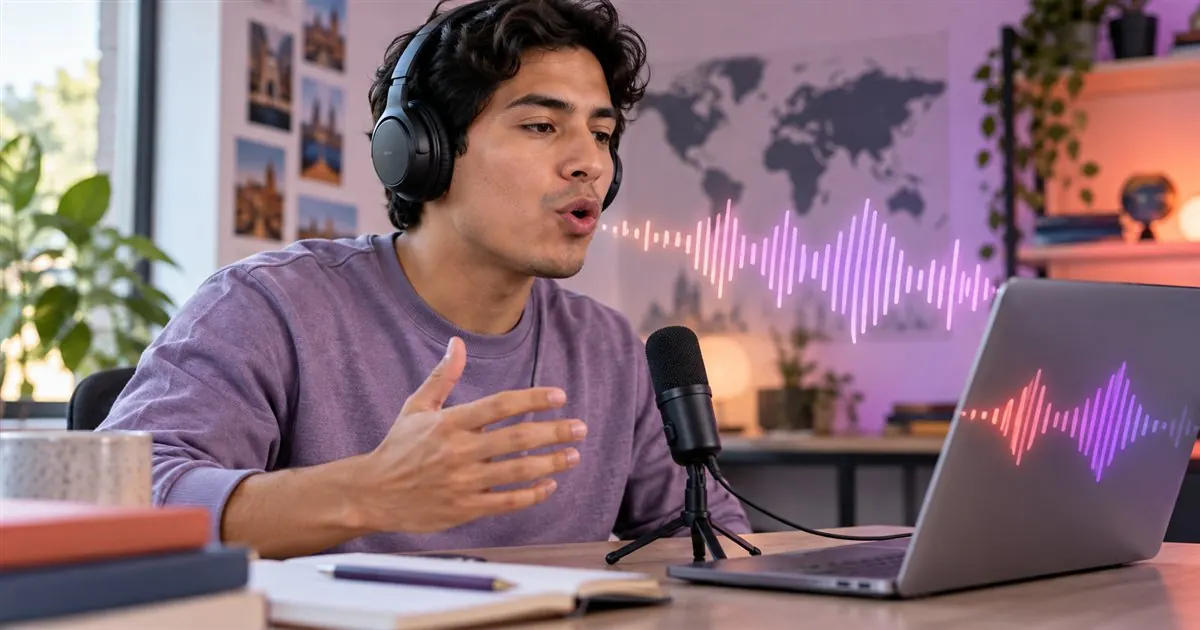
To practise speaking alone: talk out loud about what you are doing, record yourself and listen back, use shadowing (repeat right after a recording), answer exam-style questions with a timer, think in English and talk with an AI coach that gives feedback. Consistency is key: 10–15 minutes a day.
HelloVozi guide for Spanish speakers.
7 methods to practise speaking alone
- Narrate your day aloud: Now I'm making coffee…
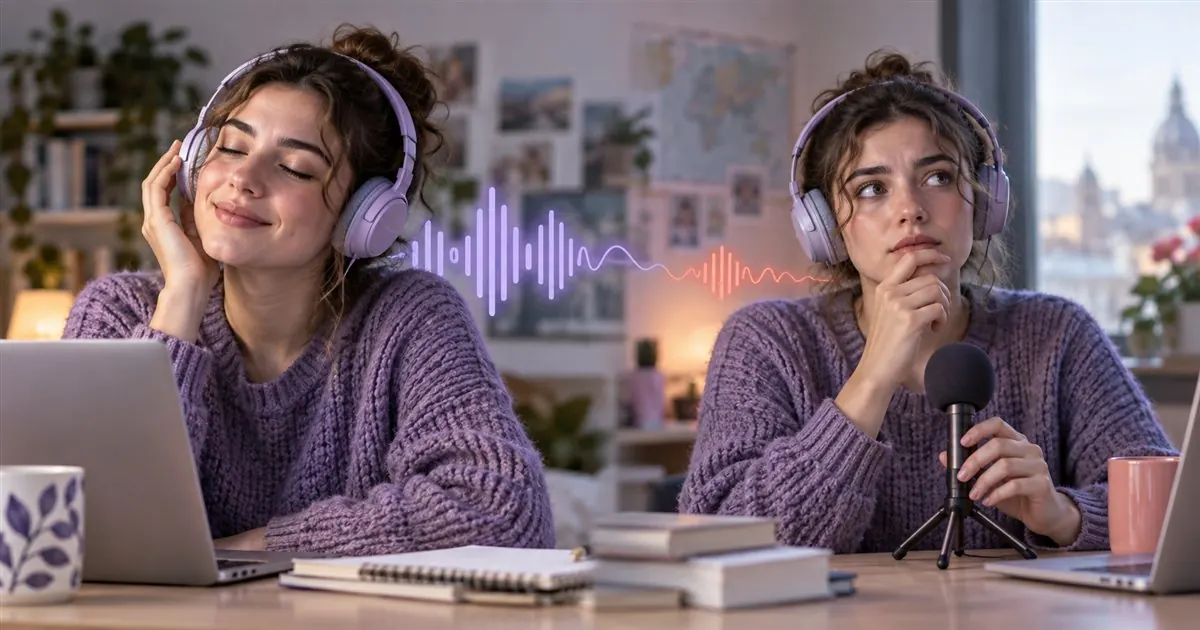
- Record 1 minute answering a question and listen: note one thing to improve.
- Shadowing: repeat a short recording at the same pace (shadowing guide).
- Describe photos: what you see, what is happening, what will happen.
- Answer timed questions, as in Cambridge Speaking.
- Read aloud conversation topics and texts.
- Talk with an AI coach that adapts to your level and gives feedback.
Does practising alone work?
Yes. Speaking aloud trains fluency and pronunciation even without another person. Understanding isn't enough to speak: you need to produce language, and practising alone lowers the pressure.
How long to practise
Little and often: 10 to 15 minutes a day. Read why short sessions work better.
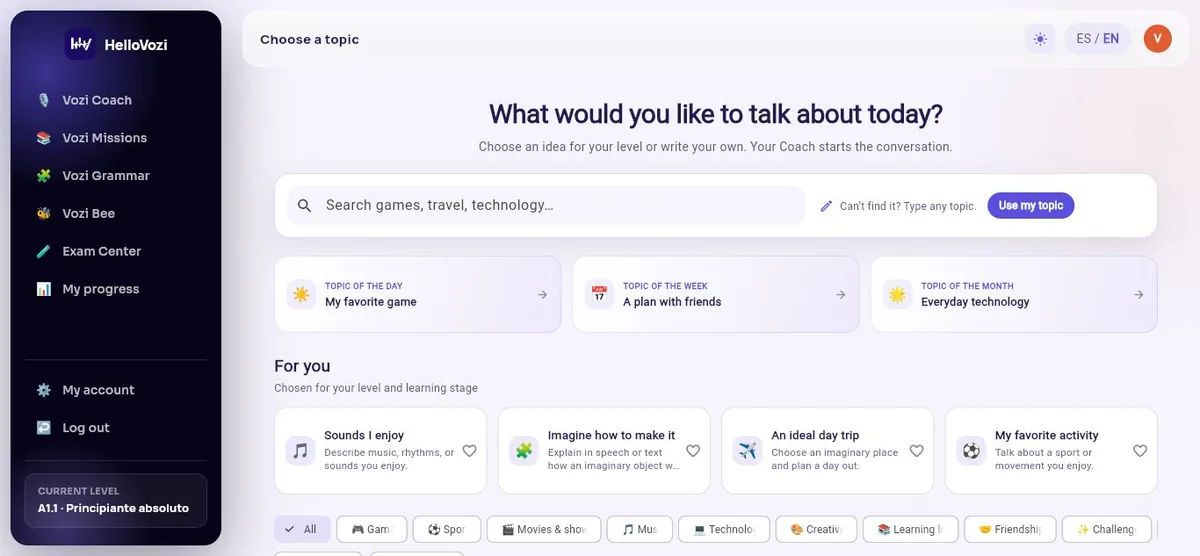
Talk at your level with Vozi Coach
In Vozi Coach you talk with an AI coach about topics at your level and get feedback at the end: what you achieved, corrections and new words.
Try Vozi Coach →Frequently asked questions
How can I practise speaking with no one to talk to?
Talk aloud, record yourself, use shadowing or talk with an AI coach.
How long should I practise a day?
10 to 15 minutes daily works better than long, spaced-out sessions.
Does recording myself really help?
Yes: listening back shows mistakes you don't notice while speaking.
Can I improve speaking without a teacher?
You can progress a lot alone; feedback from a teacher or a tool helps fix mistakes.