 By Vahid Alaghehband
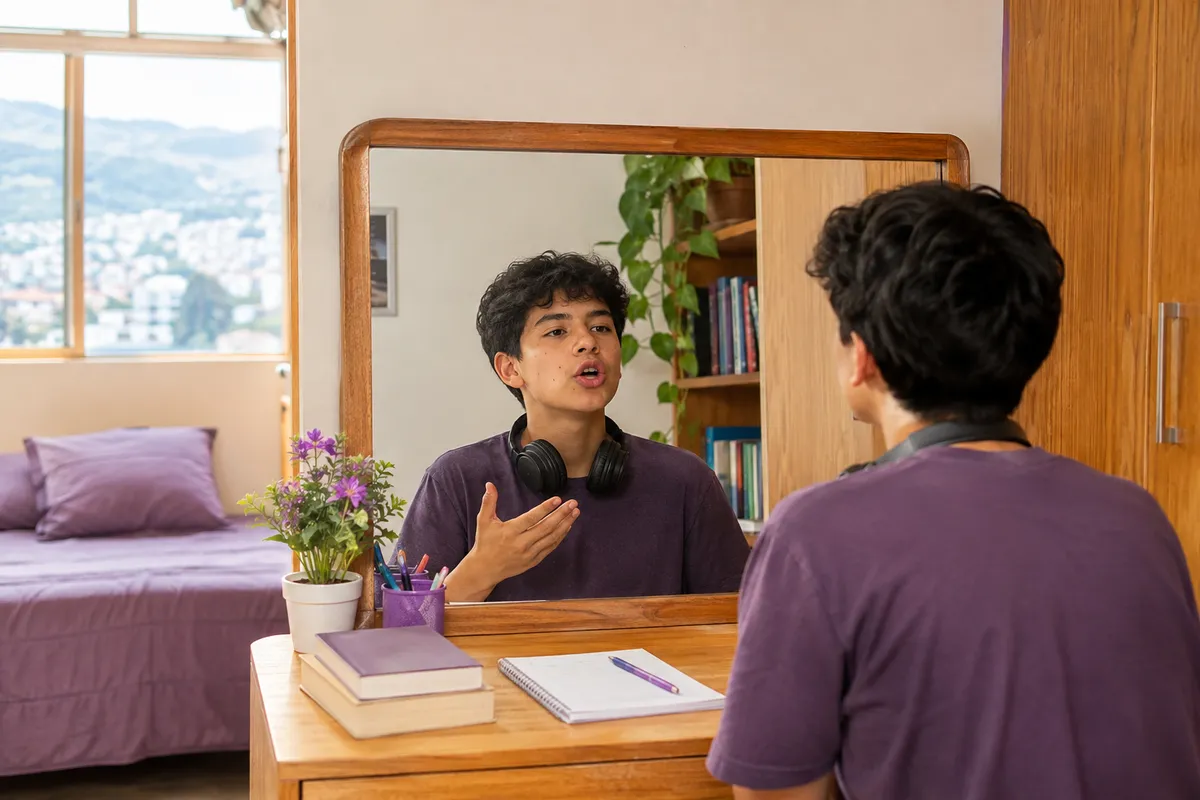
-ed has three pronunciations: /t/ after voiceless sounds like p, k, s, sh, ch (worked), /d/ after voiced sounds and vowels (played) and /ɪd/, an extra syllable, only after t or d (wanted). The most common mistake is saying "work-ed" with an extra syllable.
HelloVozi guide for Spanish speakers.
The 3 pronunciations of -ed
| Sound | When | Examples |
|---|---|---|
| /t/ | after voiceless sounds: p, k, f, s, sh, ch | worked, stopped, laughed, washed, watched |
| /d/ | after voiced sounds and vowels | played, called, lived, cleaned, opened |
| /ɪd/ | only after t or d | wanted, needed, started, decided, visited |
How do you know if a sound is voiceless?
Touch your throat and say the sound: if it doesn't vibrate (p, k, f, s), it is voiceless and -ed sounds /t/. If it vibrates (b, g, v, z, l, m, n, r) or is a vowel, it sounds /d/.
The most common mistake
Always adding an extra syllable: work-ed, play-ed. In English worked has one syllable: /wɜːkt/. The extra syllable is only for verbs ending in t or d.
How to practise
- Read the regular verbs list aloud in the three groups.
- Use shadowing: repeat right after a recording.
- Record yourself telling what you did yesterday and listen to each -ed.
Practise pronunciation by speaking
In Vozi Coach you tell what you did and get feedback at the end of the conversation.
Try Vozi Coach →Frequently asked questions
How do you pronounce worked?
/wɜːkt/, one syllable with a /t/ sound at the end.
When does -ed sound like "id"?
Only when the verb ends in t or d: wanted, needed.
How do you pronounce played?
/pleɪd/, with a /d/ sound and no extra syllable.
Is -ed pronounced the same in British and American English?
Yes, the rule is the same.