
 Por Vahid Alaghehband
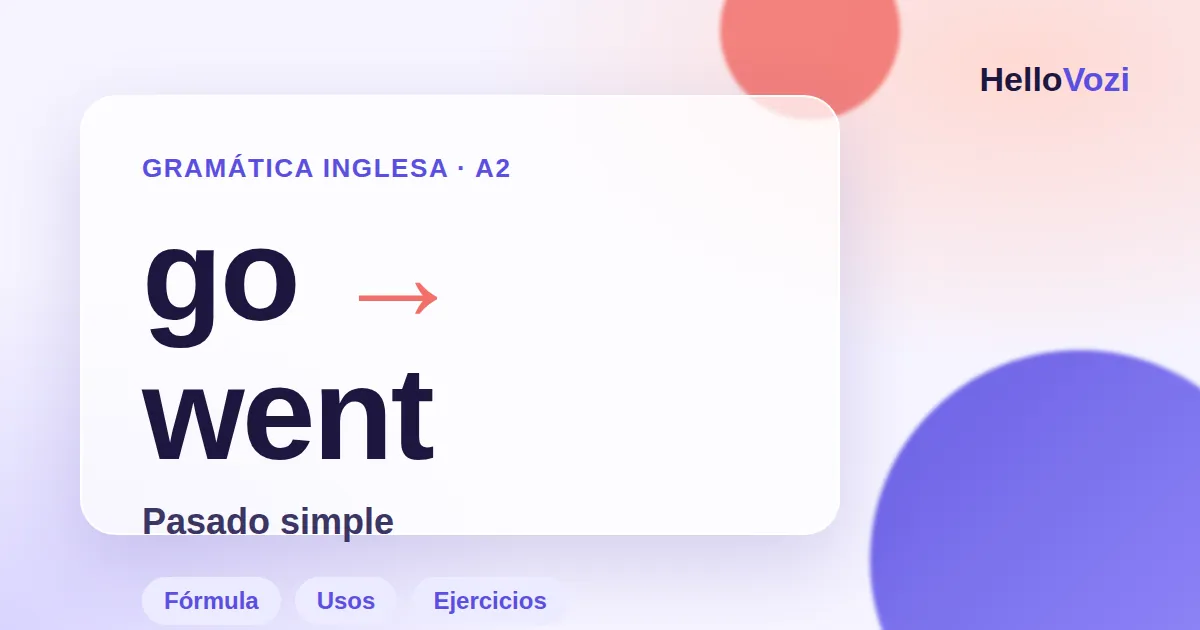
El pasado simple sirve para acciones terminadas en un momento del pasado: I visited my grandparents last weekend. Los verbos regulares agregan -ed (work → worked) y los irregulares tienen su propia forma (go → went). En negativas y preguntas se usa did con el verbo en forma base: Did you go? I didn't go.
Esta guía forma parte de la gramática inglesa por nivel. El pasado simple corresponde al nivel A2 del MCER (subnivel A2.1 en el catálogo de Vozi Grammar). Equivale casi siempre al pretérito indefinido (trabajé, fui) y a veces al imperfecto para hábitos (jugaba). La buena noticia: la forma es igual para todas las personas (salvo be: was/were).
Cómo se forma el pasado simple
| Forma | Estructura | Ejemplo |
|---|---|---|
| Afirmativa | Sujeto + verbo en pasado (-ed o irregular) | She called me. We went to the beach. |
| Negativa | Sujeto + didn't + verbo base | I didn't see the message. |
| Pregunta | Did + sujeto + verbo base? | Did they win the game? |
| Respuesta corta | Yes, + sujeto + did. No, + sujeto + didn't. | Yes, they did. No, they didn't. |
Ortografía de -ed: love → loved, study → studied, stop → stopped. El verbo to be tiene dos formas, was (I, he, she, it) y were (you, we, they), y no usa did: Were you at home? I wasn't tired.
Cuándo se usa el pasado simple
Acciones terminadas en un momento definido
Dices o se entiende cuándo pasó.
- I finished the course in June.
- We met in 2018.
- She called me an hour ago.
Una secuencia de acciones
Para contar lo que pasó, paso a paso.
- I woke up, had breakfast and took the bus.
- He opened the door, looked around and left.
Situaciones y hábitos del pasado que ya no son así
También puedes usar used to para los hábitos.
- I lived in Riobamba for five years.
- When I was a kid, I played soccer every afternoon.
20 de los verbos irregulares más usados
| Verbo | Pasado | Participio | Significado |
|---|---|---|---|
| be | was / were | been | ser, estar |
| have | had | had | tener |
| do | did | done | hacer |
| go | went | gone | ir |
| get | got | got / gotten | conseguir, llegar |
| make | made | made | hacer, fabricar |
| say | said | said | decir |
| see | saw | seen | ver |
| come | came | come | venir |
| take | took | taken | tomar, llevar |
| know | knew | known | saber, conocer |
| think | thought | thought | pensar |
| give | gave | given | dar |
| find | found | found | encontrar |
| tell | told | told | contar, decir |
| buy | bought | bought | comprar |
| eat | ate | eaten | comer |
| write | wrote | written | escribir |
| speak | spoke | spoken | hablar |
| leave | left | left | salir, dejar |
Gotten es la forma de EE. UU.; en el Reino Unido se usa got. El participio lo necesitarás para el present perfect y la voz pasiva.
Expresiones de tiempo y palabras clave
Expresiones de tiempo terminado que piden pasado simple:
- yesterday
- last night / week / year
- two days ago
- in 2020
- on Monday
- when I was…
- then
- after that
Errores frecuentes de hispanohablantes
| Error | Corrección | Por qué |
|---|---|---|
| ✗ I didn't went to the party. | ✔ I didn't go to the party. | Con didn't el verbo vuelve a la forma base: el pasado ya lo marca did. |
| ✗ Did you saw the game? | ✔ Did you see the game? | Lo mismo en preguntas: did + verbo base. |
| ✗ I goed / I eated | ✔ I went / I ate | Go y eat son irregulares; no llevan -ed. |
| ✗ Yesterday I go to the doctor. | ✔ Yesterday I went to the doctor. | En español a veces contamos en presente ("ayer voy y…"), pero en inglés hace falta el pasado. |
| ✗ I have seen her yesterday. | ✔ I saw her yesterday. | Con yesterday se usa pasado simple, no present perfect. |
| ✗ Where you went? | ✔ Where did you go? | Las preguntas con where, what o when necesitan did (salvo cuando la palabra wh- es el sujeto: What happened?). |
Pasado simple vs present perfect
| Pasado simple | Present perfect | |
|---|---|---|
| Cuándo | Momento terminado: yesterday, in 2019 | Sin fecha o periodo abierto: ever, this week |
| Ejemplo | I lost my keys yesterday. | I've lost my keys (todavía no las encuentro). |
| Pregunta típica | When did you…? | Have you ever…? |
Tienes la comparación completa en la guía del present perfect.
Miniconversación
Dos compañeros hablan del fin de semana.
A: How was your weekend?
B: It was great! I went to Baños with my cousins.
A: Nice! What did you do there?
B: We rode bikes to the waterfalls and ate at a small restaurant.
A: Did you go to the hot springs?
B: No, we didn't have time. We came back on Sunday afternoon.
A: Sounds fun. I stayed home and studied for my exam.
B: Oh, how did it go?
10 ejercicios con respuestas
Completa con el verbo en pasado simple. En el último, corrige el error.
- We ___ (watch) a movie last night.
- She ___ (not / come) to class yesterday.
- ___ you ___ (buy) the tickets?
- I ___ (see) Carlos two days ago.
- They ___ (study) all weekend.
- He ___ (take) the bus to work.
- Where ___ you ___ (go) on vacation?
- I ___ (be) very tired after the trip.
- We ___ (not / be) at home.
- Corrige: I didn't knew the answer.
Ver respuestas
- watched
- didn't come
- Did … buy
- saw
- studied
- took
- did … go
- was
- weren't
- I didn't know the answer.
Siguiente paso: si no sabes tu nivel, haz el test de nivel de inglés (unos 15 minutos, con resultado al instante). Para seguir con este tema, conoce los ejercicios de gramática inglesa por nivel de Vozi Grammar.
Preguntas frecuentes
¿Cómo se forma el pasado simple en inglés?
Los verbos regulares agregan -ed (worked, played) y los irregulares tienen su propia forma (went, saw). En negativas y preguntas se usa did con el verbo en forma base: I didn't go, Did you go?
¿Cuáles son los verbos irregulares más comunes en inglés?
Entre los más usados están be (was/were), have (had), do (did), go (went), get (got), make (made), say (said), see (saw), come (came) y take (took).
¿Cuándo se usa did?
En preguntas y negativas en pasado simple, con cualquier verbo excepto be: Did you call her? I didn't call her. En afirmativas no se usa (salvo para dar énfasis).
¿Cómo se pronuncia la terminación -ed?
Tiene tres sonidos: /t/ después de sonidos sordos (worked), /d/ después de sonidos sonoros (played) e /ɪd/, una sílaba extra, solo después de t o d (wanted, needed).